
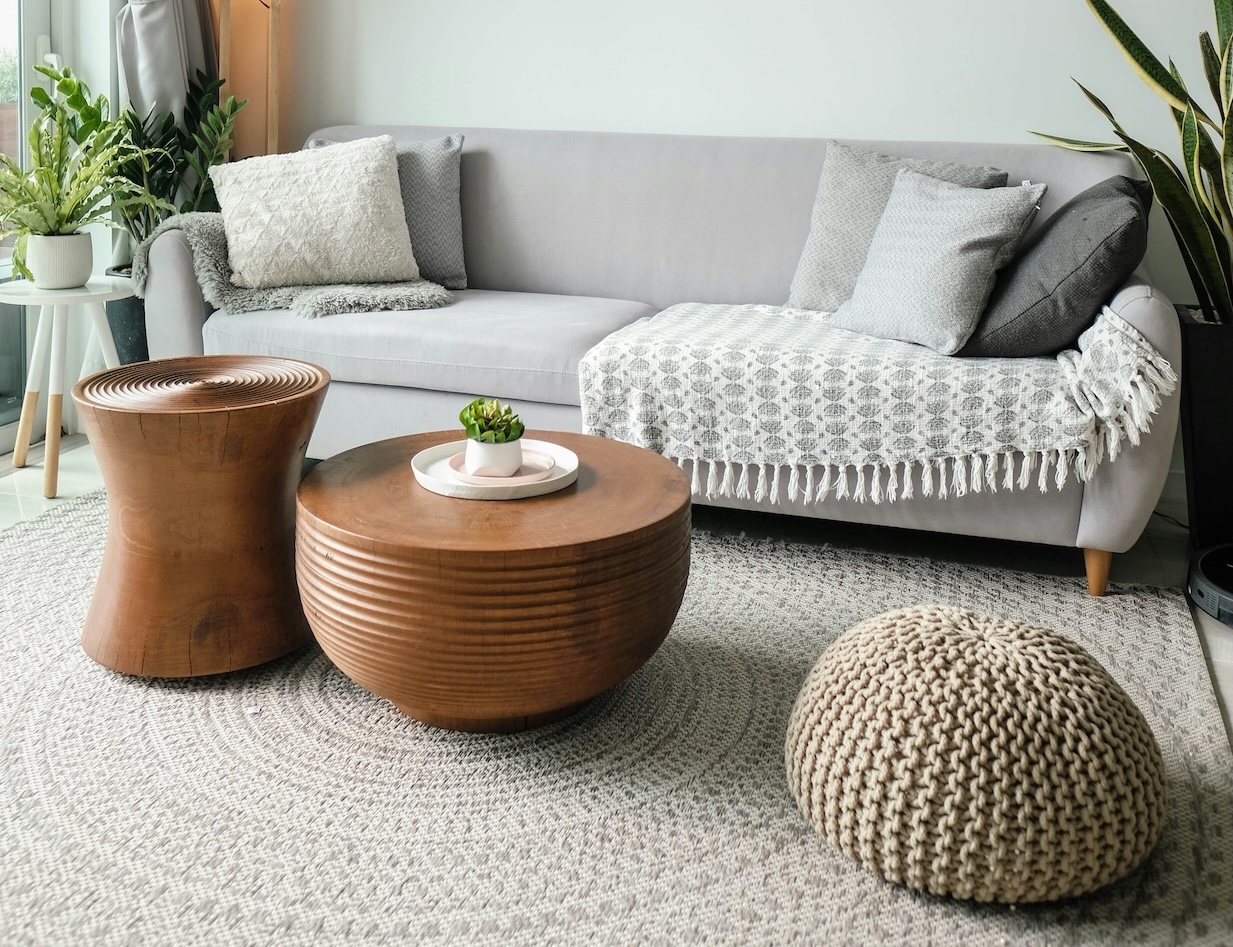
This is what sensory friendly home design actually means. Not a special room, not expensive equipment, just a home that works with how your child’s senses process the world rather than against it.
It is not one thing, it is several
Sensory processing needs show up differently depending on the sense involved. Touch, sight, sound, smell and taste are the ones most people think of first, but movement matters just as much, sometimes more. A sensory seeking child who cannot stop climbing, jumping or crashing into things, are usually not being wild for the sake of it. Their body is looking for input it is not getting enough of anywhere else.
Credit: Quit Mark
The senses your child is working with
Most of us grew up learning about five senses: touch, sight, sound, smell and taste. These are the ones we can name easily, the ones that feel obvious. But the body actually runs on eight, and for many neurodivergent children it is the three lesser-known ones that cause the most difficulty at home.
Touch is about more than feeling textures. It covers how the skin registers pressure, temperature, pain and light contact. A child who cannot bear labels in their clothing, who flinches at an unexpected hug, or who conversely seeks constant physical contact, is responding to how their touch system is calibrated.
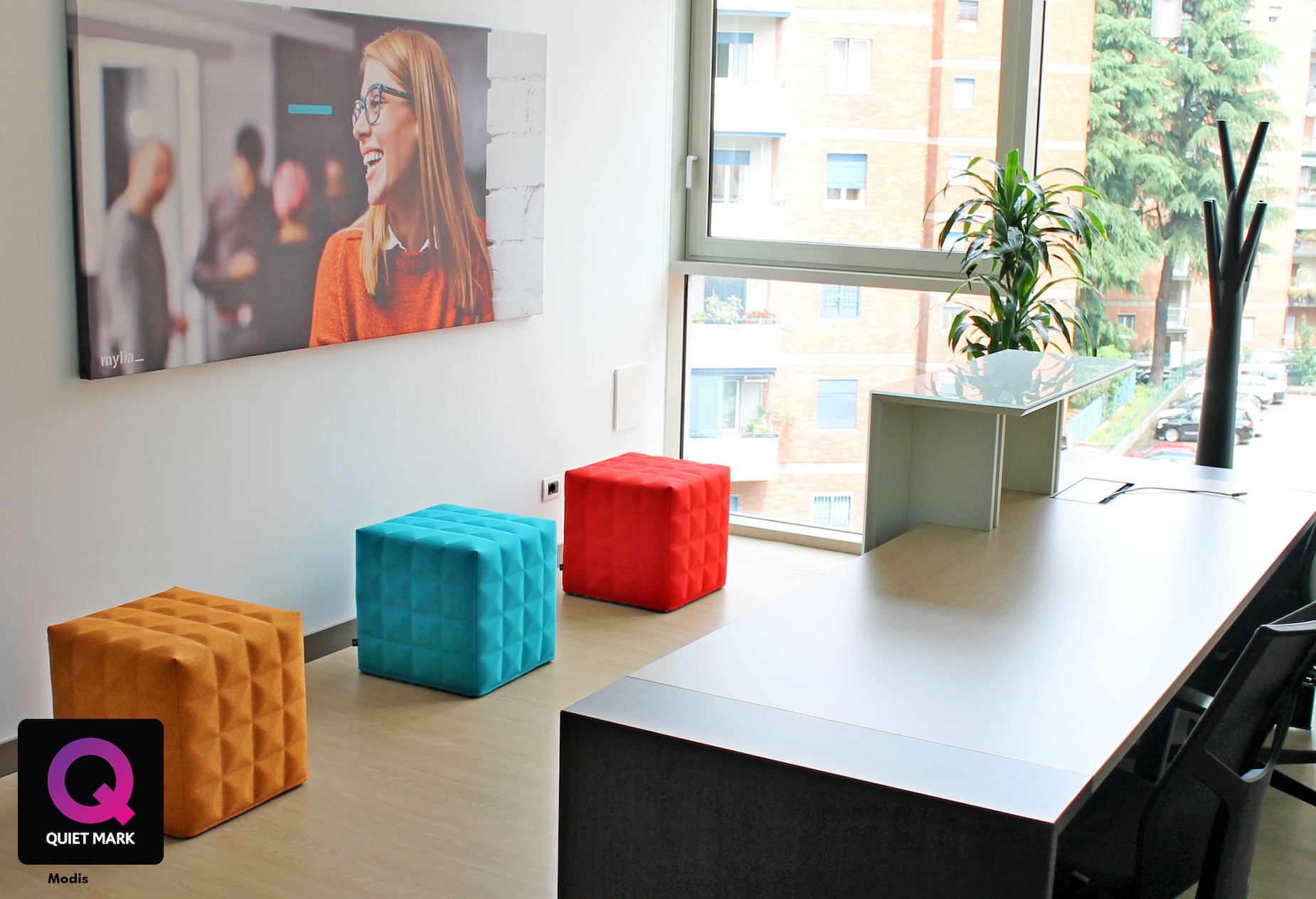
Sight is not just about how clearly a child can see. It includes how the brain processes visual information including busy patterns, bright lights and flickering screens. A visually sensitive child in a cluttered, brightly lit room is doing far more work than we realise just to stay regulated.
Sound can be the most disruptive sense in the home. A child who covers their ears at the hoover, who cannot filter background noise, or who is conversely unaware of sound, is not being dramatic. Their auditory system is processing the world at a different volume to everyone else in the room.
Smell and taste tend to show up most clearly around food, but they affect the whole home environment too. Cleaning products, candles, cooking smells. These can be genuinely overwhelming for a child whose olfactory system is highly sensitive.
The three senses most people do not know about

Credit: SolveJ Swings
Beyond the familiar five, there are three more senses that have an enormous impact on how a child moves through the world and through your home.
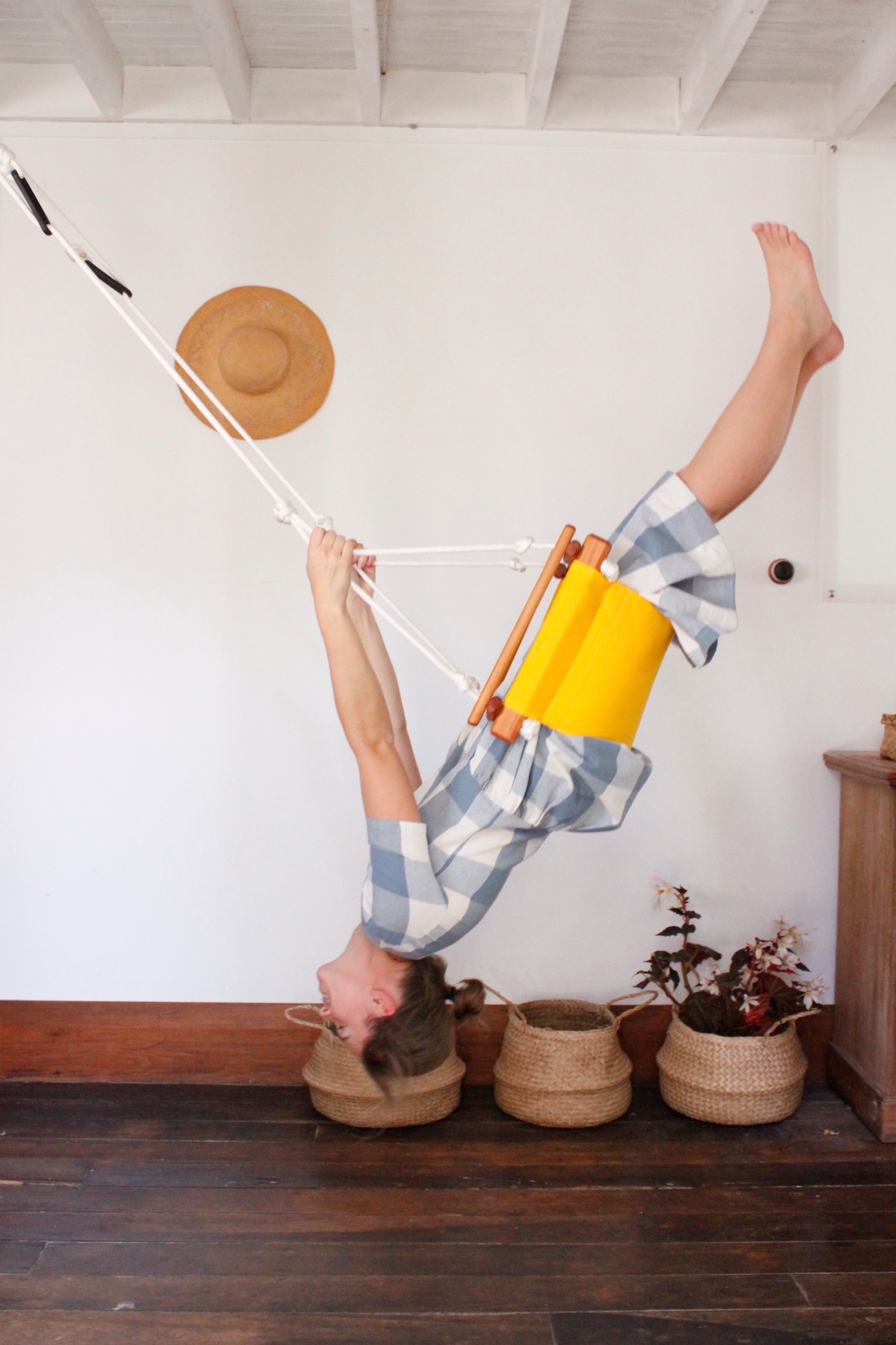
The vestibular sense lives in the inner ear and governs balance and movement. It tells the body whether it is upright, spinning, still or in motion. A child who seeks constant movement including rocking, spinning and hanging upside down is often trying to feed a vestibular system that needs more input. A child who seems fearful of movement, who avoids swings or escalators, may have a vestibular system that is easily overwhelmed.
Proprioception is the sense of where your body is in space. It comes from the muscles, joints and tendons, and it is what lets you know how hard you are pressing, how tightly you are holding something, and where your limbs are without looking at them. Children who crash into furniture, who hug too hard, who chew everything, are frequently proprioception seekers. Their system needs more feedback than everyday life provides.
Interoception is the most internal of the eight senses. It is the sense that tells you when you are hungry, thirsty, hot, tired, anxious or needing the toilet. For many neurodivergent children this signal is either very quiet or very loud, which is why some children seem unaware they need to eat until they are already melting down, while others seem constantly preoccupied with physical sensations they cannot name.
Understanding all eight senses does not make parenting easier overnight. But it does change what you are looking at when your child behaves in a way that seems hard to explain, and it changes what you reach for first.
That is why a sensory friendly home is not a single fix. It is a series of small, specific changes, each aimed at a particular need.
Start with one soft place to land
For a child with sensory seeking needs, the starting point is simple: give their body somewhere safe to do what it is already trying to do.
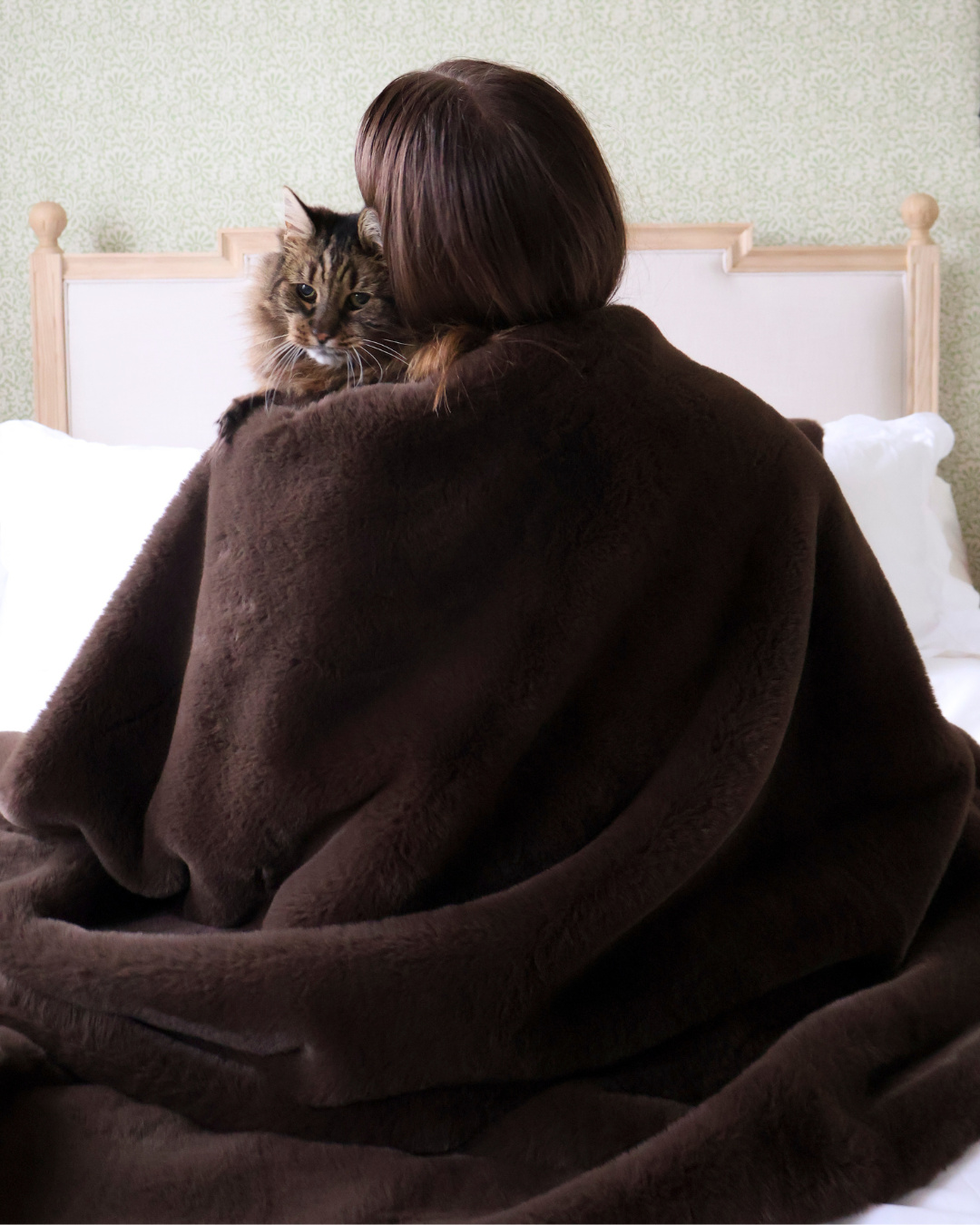
Layers of soft material do most of the work. Rugs, beanbags and large cushions absorb movement rather than resisting it. A weighted blanket or a heavy quilt gives the kind of steady, deep pressure that helps a sensory seeking child settle after a big day – and it is one of the most searched-for sensory tools for neurdivergent children, for good reason. None of this needs to be expensive or specialist, a lot of it is things you may already have around the house, just not yet grouped together with intention.
Alongside that, something that offers gentle resistance helps a seeking body release energy safely. A balance cushion, a rocker, a wobble board, even a body sock or resistance band if space is limited. The aim is not to stop the movement, it is to guide it somewhere soft. These small additions are at the heart of sensory friendly bedroom ideas that actually work for autistic and ADHD children at home.

Credit: Kids Leon Bean Bags from Icon

Credit: Keep Cosy Huggable toy
When things tip into overwhelm
Even with the right setup, there will be moments when a child’s body seems to be asking for more than usual, crashing, grabbing, holding on too tight. That is not naughtiness, it is a nervous system asking for stronger feedback than it is currently getting.
In that moment, the aim is not to make the movement stop immediately, it is to guide it somewhere safe and steady. Giving the body a job to do, pushing against a wall, carrying something heavy, rolling a ball back and forth, often works faster than asking for stillness ever will.
Calm, steady adult energy matters here too. A child will match your body before they can follow your words.
And when it is you who feels overwhelmed
Supporting a child who constantly seeks touch and movement is genuinely tiring. If you feel touched out, overstimulated, or simply worn down by being climbed on, that is a completely normal response, not a failure on your part.
Stepping into another room for even a minute, lowering physical contact by sitting side by side rather than face to face, slowing your own breathing, these are not small things. They are how you look after your own nervous system so you have something left to offer.
Credit: Nathan Anderson, Unsplash
Credit: Joanne Jeyes Interiors
Where to go from here
This is one small piece of a much bigger picture. Every sense has its own version of this, its own quick wins, its own way of setting up a calm space for neurodivergent children, and its own approach for both the child and the adult supporting them.
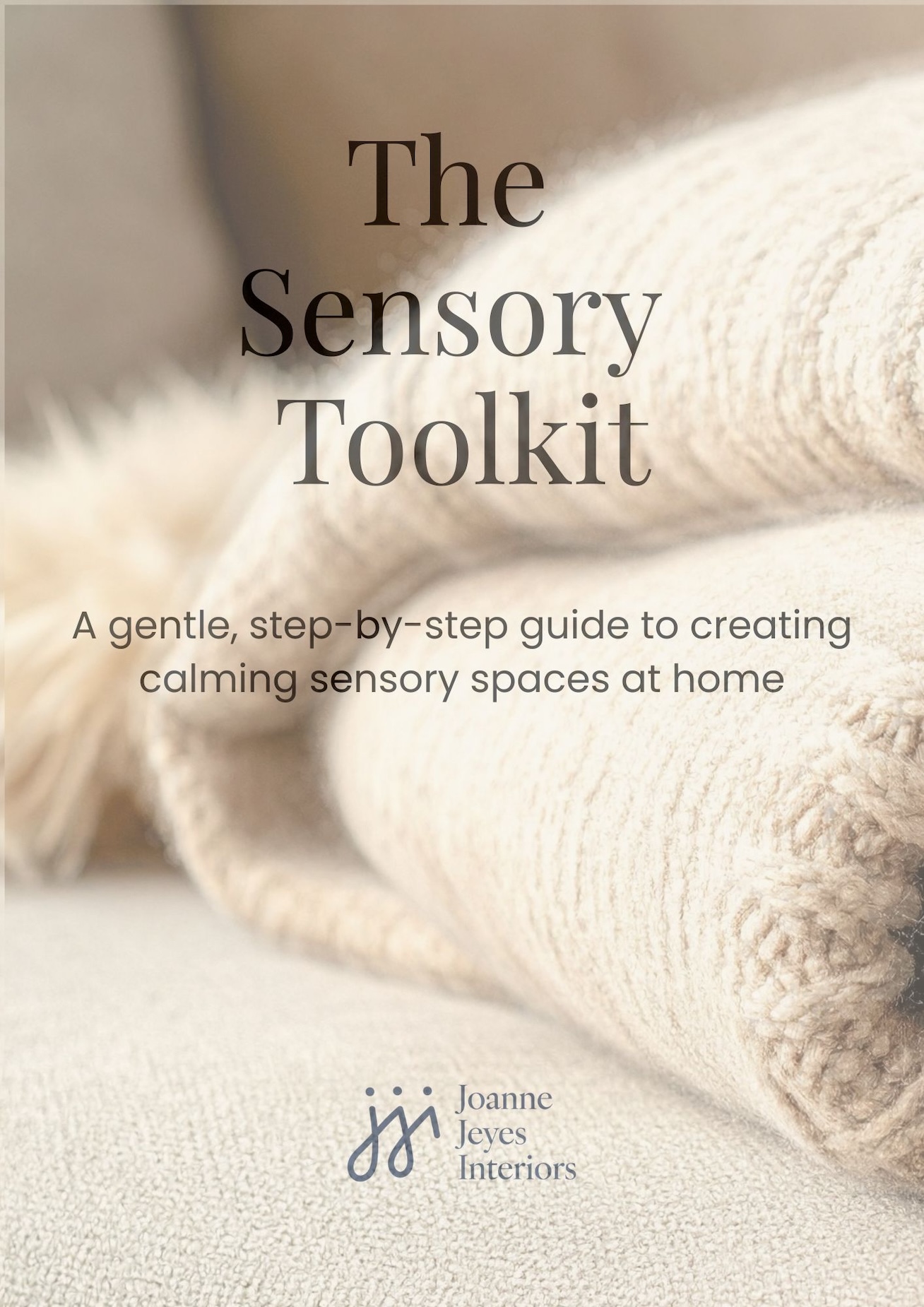
If this is the kind of thing you have been trying to figure out on your own, you are not the only one. It is exactly why I built a full Sensory Toolkit (link to toolkit page) covering every sense in the same practical way, and why I keep coming back to this subject in my work with families.
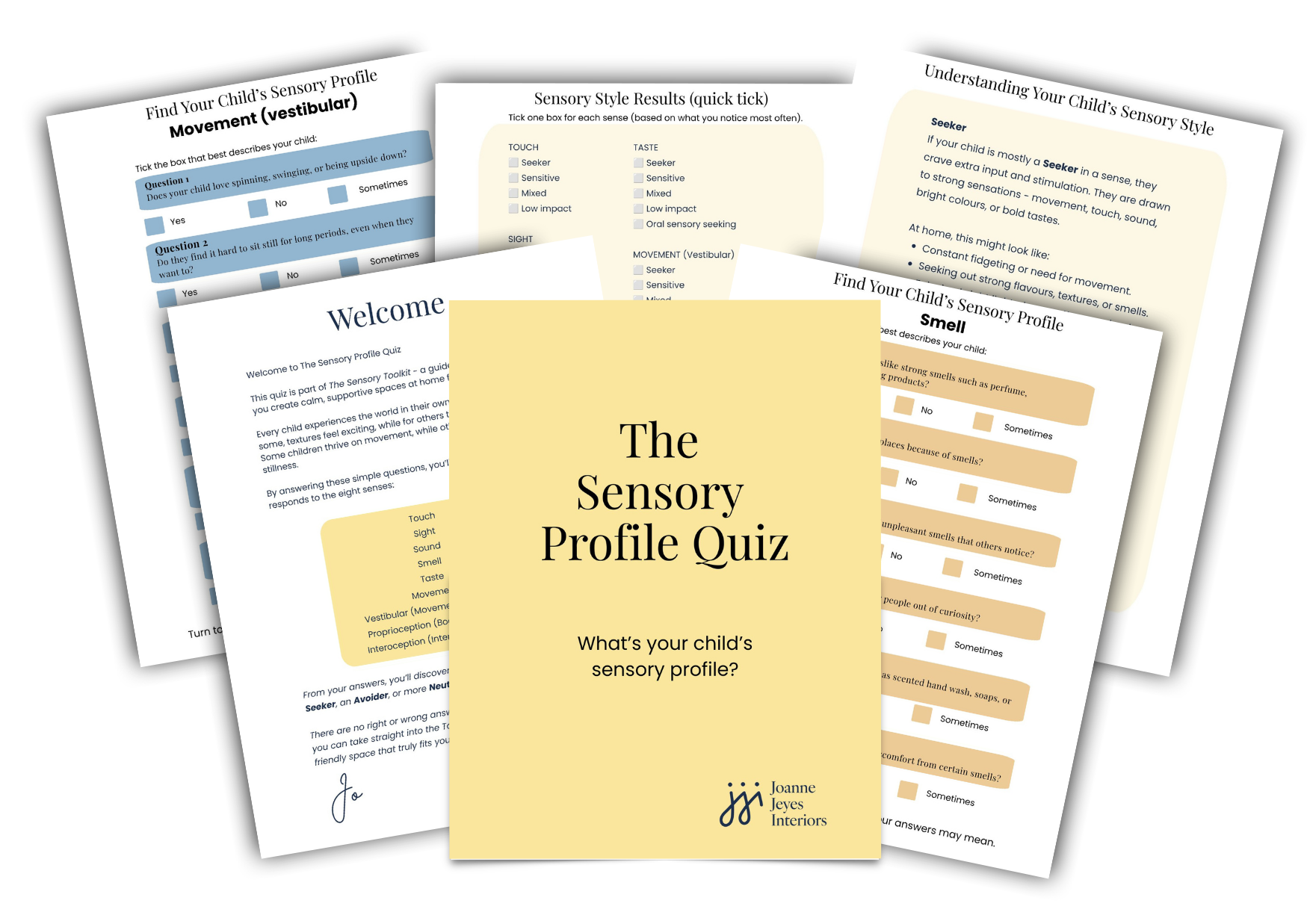
If you would like to find out more, my Sensory Toolkit offers a complete home guide for parents and carers of neurodivergent children – covering all 8 senses, including the three hidden senses most people don’t know about.
Through a simple quiz, you’ll discover whether your child is a Sensory Seeker or Sensory Sensitive, then get practical, room-by-room advice tailored to them – from quick wins you can try today to calm space ideas, sensory tool recommendations, and what to do in moments of overwhelm.
Everything is designed with real UK homes and real budgets in mind.
Get your copy of the Sensory Toolkit – A sensory home guide for neurodivergent families here
