
When a loved one is diagnosed with dementia, life often changes in an instant. Emotions can run high, and the future may feel uncertain. Yet amongst the confusion and fear, one thing remains constant – the desire to provide comfort, security, and dignity.
At Joanne Jeyes Interiors, I understand how important it is to make home a place of safety and familiarity. Having cared for my own mum who lived with dementia, I know first-hand how small, thoughtful changes can help someone feel more at ease in their surroundings.
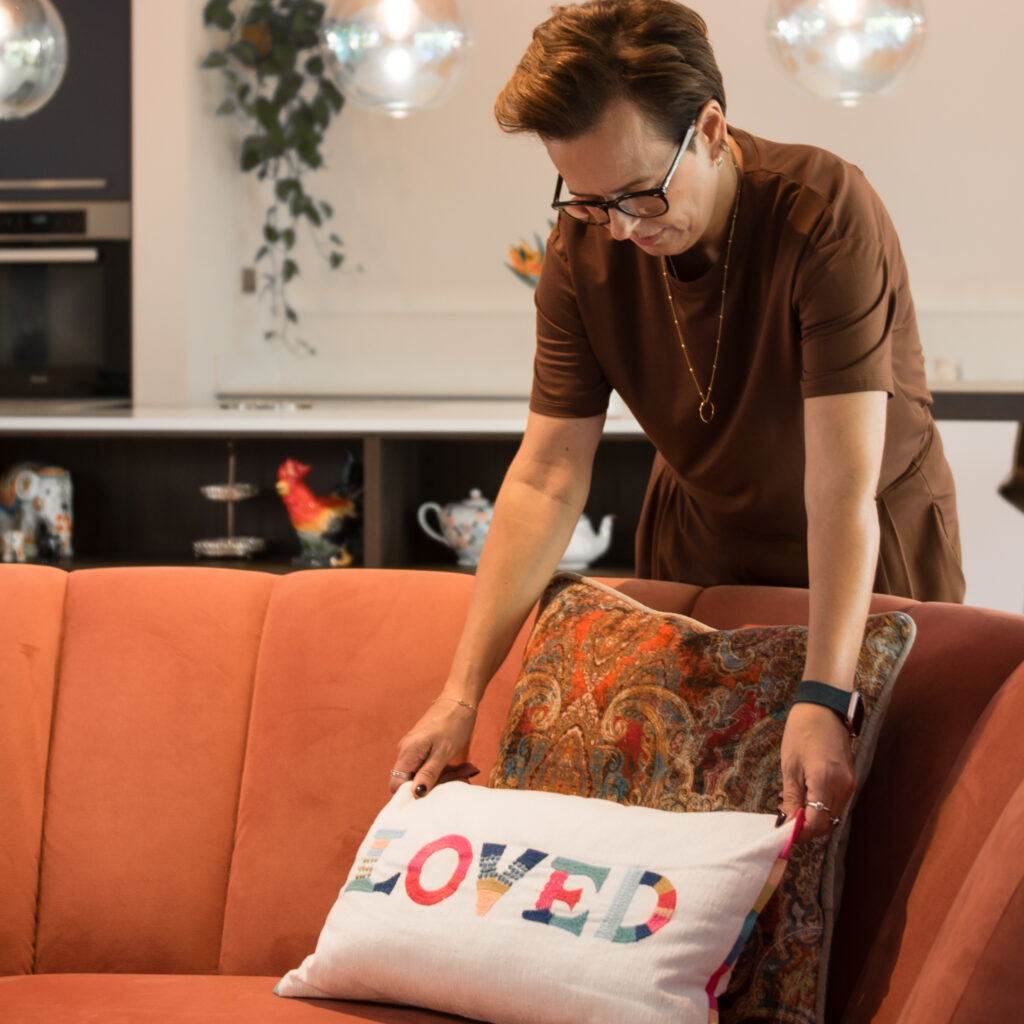
That’s why I created my free Dementia Friendly Home guide – to empower families with practical, achievable advice on adapting their homes. Below, I share some of the most effective ideas from the guide to help you get started. Whether you’re supporting someone newly diagnosed or navigating the later stages, these tips are designed to maintain independence while enhancing wellbeing.

Why Dementia Friendly Design Matters
A dementia-friendly environment isn’t about turning your home into a clinical space – far from it. It’s about creating spaces that feel safe, comforting, and easy to navigate. Clear contrasts, consistent lighting, and familiar furnishings all play a part. The goal is to reduce confusion, prevent accidents, and promote a sense of calm.
This blog walks you through practical advice for every area of the home — from the sitting room to the garden — using real-world, design-led solutions.
Sitting Room: Comfort and Clarity
The living room is often where we spend most of our time, and it can be a great place to start making adjustments.
• Clear the clutter: Trip hazards like rugs, magazine racks and trailing wires can become dangerous. Keep pathways clear and ensure there’s plenty of room to move around safely.
• Lighting matters: Shadows can be unsettling. Aim for balanced, even lighting across the whole room. Reduce glare and avoid strong contrasts between light and dark areas.
• Familiar furniture: Choose pieces your loved one recognises and finds comfortable. Adding arm covers or reupholstering in a contrasting fabric can support visual recognition.
• Meaningful décor: Display family photos, memory books or travel souvenirs to spark conversation and connection.
• Time and orientation: A large clock that shows the time, day and date clearly can help with daily orientation — especially one they’re already used to.

Kitchen: Support Independence
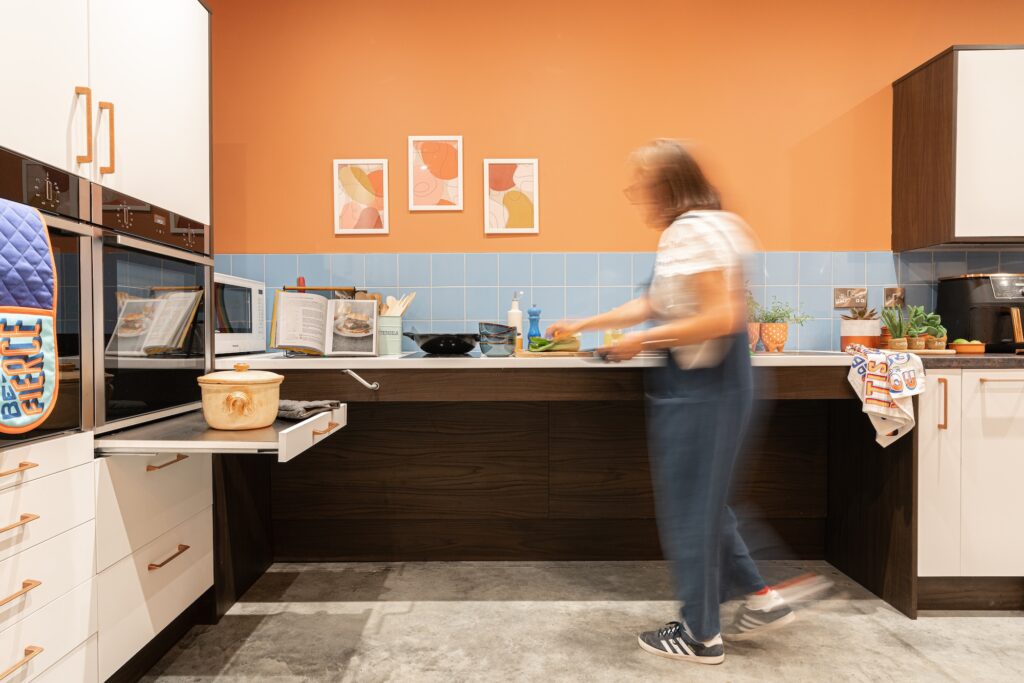
Kitchens can be busy and potentially hazardous. But with a few key changes, they can still be safe and functional.
• Visibility is key: Glass cabinet doors or open shelving help your loved one see where things are stored. You can also label drawers and cupboards with simple, familiar images.
• Keep it familiar: Replacing appliances? Try to match their old functionality. Keep the layout consistent.
• Non-slip flooring: If new flooring isn’t an option, consider an anti-slip coating for tiles — widely available from DIY stores.
• Safety switches: Install a gas or hob cut-off switch and check smoke and gas detectors regularly.
• Line of sight: A serving hatch or glazed door can help create visual connection between rooms, supporting reassurance and familiarity.
Bedroom: Restful and Reassuring
This space can feel especially intimidating, particularly when reflections, water, and unfamiliar fittings come into play.
• Avoid shower curtains: They can become a fall risk. Instead, install a clear, fixed shower screen with a visible edge.
• Familiar taps: Simple, cross-head taps are easier to use than modern mixer taps.
• Grab rails and seats: Essential for safety. There are now stylish, non-institutional options available.
• Mirror management: Reflections can cause confusion. Consider covering mirrors or using reversible designs.
• Water safety: Use temperature control valves or pressure-activated plugs to prevent scalding or flooding.

Garden: A Safe Space to Enjoy
Outdoor spaces offer sensory stimulation, fresh air, and peace — all of which are incredibly therapeutic for people living with dementia.
• Safe pathways: Ensure routes are simple, well-maintained, and without dead ends.
• Tidy and toxin-free: Remove poisonous plants and sharp thorns. Keep tools visible and accessible.
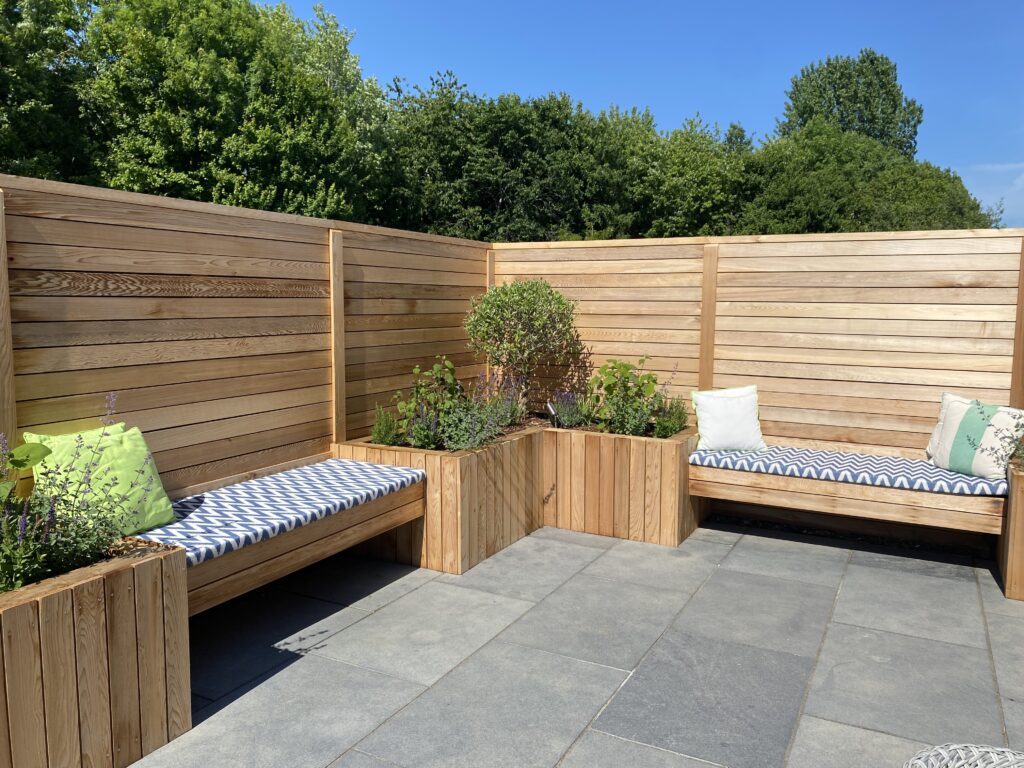
• Create resting spots: Benches or seats in shaded areas provide comfort and help prevent fatigue.
• Sensory elements: Gentle water features, rustling plants, and scented flowers encourage engagement with nature.
The Heart Behind the Design
If you found this blog helpful, I invite you to download my free dementia-friendly home guide. It’s filled with more room-by-room ideas, real-life examples, and links to helpful resources.
You can get your copy directly from my website: www.joannejeyes.com
And please, feel free to share the guide with friends, family, or anyone you know who may benefit.

Let’s Keep the Conversation Going
I would love to hear your stories. What changes have helped your loved one feel more at ease? Are there any design solutions you’ve discovered that have made a big difference?
Leave a comment, send me an email, or follow along on social media to stay connected. Together, we can make homes safer, warmer, and more comforting for those living with dementia.
Thank you for reading — and for caring.
